How Oil & Gas Storage Tank Fabrication is adapting to strict environmental regulations
The Future of Storage Tank Manufacturing: Fads and Technologies to Watch
The storage tank manufacturing industry gets on the cusp of a crucial development, driven by arising patterns in smart products, automation, and sustainability. As sectors increasingly prioritize environmental duty, advancements such as green compounds and IoT-driven surveillance systems are reshaping functional standards. Additionally, the growing need for personalization and modular styles recommends a change towards more versatile production practices. Recognizing these trends not only highlights the challenges ahead yet also reveals opportunities that might redefine the landscape of storage tank manufacturing in the coming years. What ramifications might these innovations hold for industry stakeholders?
Innovations in Smart Materials
Recently, the storage tank manufacturing sector has seen a significant uptick in the fostering of clever materials, revolutionizing style and functionality. Smart materials, which can respond dynamically to environmental changes, have actually made it possible for manufacturers to develop tanks that are not just extra long lasting but also extra efficient in their operational capabilities.
One significant improvement is the combination of shape memory alloys and polymers that can adapt to varying pressures and temperatures - Texas Oil & Gas Storage Tank Fabrication Authority. This versatility enhances the architectural honesty of containers, reducing the risk of leaks and failings. Furthermore, these products often exhibit self-healing residential or commercial properties, which further lengthens the lifespan of storage space tanks, reducing maintenance costs and boosting security
The unification of sensors within wise products allows for real-time tracking of storage tank conditions, offering crucial information that helps in anticipating upkeep and risk administration. This data-driven strategy not only improves operational efficiency however also lines up with environmental sustainability objectives by maximizing source usage and stopping spills.
Increase of Automation Technologies
The surge of automation innovations is changing storage tank manufacturing by integrating robotics into production processes, improving performance and accuracy. In addition, the deployment of wise sensors makes it possible for real-time tracking, ensuring top quality control and safety and security standards are fulfilled. AI-driven procedure optimization additionally simplifies operations, minimizing prices and improving general efficiency in the sector.
Robotics Combination in Manufacturing
Robotics integration is transforming the manufacturing landscape, particularly in the storage tank market. As manufacturers undertaking for raised effectiveness and precision, robotics innovations are ending up being essential tools for streamlining manufacturing procedures. Automated systems can executing recurring jobs with better speed and precision than human labor, decreasing the chance of errors and boosting general item quality.
Among the vital benefits of robot assimilation is the capacity to maximize process. Automated robot arms can deal with hefty materials, weld components, and perform inspections, which minimizes physical stress on employees and reduces downtime. This change not only improves safety however also allows human workers to concentrate on even more complex and value-added tasks.
Moreover, robotics can facilitate flexible production, allowing business to adjust promptly to changing market needs - Texas Oil & Gas Storage Tank Fabrication Authority. Advanced shows permits robotics to conveniently switch between various tasks and products, which is particularly useful in a sector where customization is progressively desired
As robotics modern technology proceeds to progress, manufacturers can expect improved abilities, consisting of boosted machine discovering formulas and boosted fact applications, additionally driving performance in storage tank production and setting new criteria for the industry.
Smart Sensors Release
As manufacturers progressively accept automation modern technologies, the implementation of wise sensors is becoming a crucial facet of modern production procedures in the storage tank market. These sensing units promote real-time surveillance and supply crucial information that improve operational performance and security. By incorporating smart sensing units into manufacturing systems, companies can track numerous criteria including temperature, stress, and structural integrity, allowing positive upkeep and minimizing the risk of failures or leaks.
In addition, the information collected from these sensing units can be leveraged to enhance the supply chain, guaranteeing that products are available when needed while decreasing waste. This level of understanding enables manufacturers to respond quickly to altering conditions and consumer demands, boosting general efficiency.
Furthermore, wise sensing units contribute to enhanced governing conformity by continually ensuring and monitoring environmental factors adherence to safety requirements. As the industry proceeds towards even more sustainable methods, the ability to monitor emissions and source consumption in real-time is indispensable.
AI-Driven Process Optimization
Manufacturers in the storage tank sector are progressively harnessing the power of AI-driven procedure optimization to enhance operational efficiency and decision-making capabilities. By incorporating sophisticated formulas and maker learning techniques, firms can examine huge amounts of information created throughout the production process. This data-driven approach enables real-time surveillance of production metrics, causing even more timely interventions and educated choices.
AI modern technologies help with anticipating maintenance, permitting manufacturers to prepare for devices failings prior to they occur, consequently minimizing downtime and maintenance expenses. Additionally, these systems can enhance resource allowance by assessing production patterns and changing workflows, ensuring that products and labor are made use of successfully.
AI-driven optimization enhances quality control by identifying potential defects during the manufacturing procedure. Automated inspections powered by AI can swiftly spot incongruities, guaranteeing that only items fulfilling stringent top quality standards progress with the assembly line.
As the storage tank industry proceeds to accept automation, AI-driven procedure optimization stands apart as a transformative pressure, driving development and competition. By leveraging these technologies, manufacturers can not only simplify operations but also adjust promptly to market needs, placing themselves for sustainable growth in a progressively intricate manufacturing landscape.
Emphasis on Sustainability Practices
As the storage tank manufacturing market advances, a substantial emphasis is put on sustainability techniques. This consists of the fostering of eco-friendly products, the execution of energy-efficient production processes, and the assimilation of circular economic situation principles. By focusing on these initiatives, manufacturers not only reduce their environmental influence however also boost the longevity and effectiveness of their items.
Green Materials Fostering
Progressively, the storage tank production sector is embracing environment-friendly materials as a basic aspect of sustainability practices. Oil & Gas Storage Tank Fabrication. This shift is driven by increased environmental understanding and regulative stress, triggering manufacturers to seek choices that lessen eco-friendly effect
Recycled metals and eco-friendly compounds are obtaining grip, providing both efficiency and lower carbon footprints. For circumstances, utilizing high-recycled-content steel not just decreases the demand for virgin products but likewise enhances the general sustainability of the item lifecycle. Furthermore, manufacturers are exploring bio-based resins that supply longevity while being much less damaging to the environment.
Moreover, the fostering of green coatings and surfaces, which are without volatile natural substances (VOCs), reflects the market's commitment to reducing air pollution and promoting much healthier working conditions. These innovations not just line up with global sustainability objectives but additionally satisfy the expanding market need for greener items.
The integration of eco-friendly products in storage tank manufacturing is not just a trend; it stands for an aggressive approach towards liable manufacturing that prioritizes both ecological stewardship and financial practicality, setting a brand-new requirement for future advancements in the market.
Energy-efficient Manufacturing Processes
There is a growing acknowledgment within the storage tank manufacturing sector of the significance of energy-efficient processes as an important component of sustainable methods. As the market deals with enhancing stress to reduce its carbon impact, manufacturers are implementing cutting-edge innovations and approaches targeted at decreasing energy usage throughout the production cycle.
One significant pattern is the adoption of advanced manufacturing methods such as lean manufacturing and automation. These methods streamline operations, minimize waste, and improve efficiency, while also lowering power use. Additionally, the combination of renewable resource sources, such as solar and wind power, into manufacturing centers is becoming more widespread, enabling business to run sustainably and decrease dependancy on nonrenewable fuel sources.
Moreover, energy-efficient machinery and devices are being prioritized in brand-new financial investments, as manufacturers seek to maximize their energy intake. Using power monitoring systems enables real-time surveillance and evaluation, promoting continuous enhancement in power effectiveness.
Round Economic Climate Assimilation
A notable shift in the direction of circular economic climate integration is changing sustainability methods within the storage tank manufacturing industry. This strategy highlights the value of resource performance, waste reduction, and the recycling of materials throughout the production lifecycle. By taking on circular principles, manufacturers are progressively concentrated on developing containers that prioritize recyclability, repairability, and longevity.
As part of this change, firms are exploring cutting-edge materials and production approaches that lessen ecological influence. The unification of recycled metals and plastics not just lowers the demand for virgin resources yet additionally reduces carbon emissions related to removal and handling. Furthermore, manufacturers are implementing take-back systems that facilitate the refurbishment and recycling of end-of-life tanks, consequently shutting the loophole in the production cycle.
Cooperation among stakeholders, consisting of customers and distributors, is important for cultivating a round economy. This collaboration makes it possible for the sharing of finest methods and urges the advancement of sustainable supply chains. Oil & Gas Storage Tank Fabrication. Eventually, incorporating circular economic climate principles into storage tank manufacturing not just improves environmental stewardship however additionally positions business to fulfill evolving regulatory standards and customer expectations for sustainability
Boosted Safety Protocols
In today's production landscape, boosted safety and security procedures have actually come to be important for storage tank manufacturers. The sector deals with boosting governing scrutiny and needs for greater security requirements because of the prospective dangers related to the storage of dangerous products. Manufacturers are taking on a complex strategy to improve safety steps throughout the manufacturing procedure.
One significant growth is the execution of sophisticated danger evaluation tools that recognize prospective dangers throughout the layout and manufacturing stages. These tools promote aggressive actions to alleviate risks prior to they escalate right into vital problems. Manufacturers are spending in worker training programs that emphasize safety and security practices, guaranteeing that all employees are skilled in emergency procedures and devices handling. (Oil & Gas Storage Tank Fabrication)
In addition, there is an expanding emphasis on the use of top notch products and innovative styles that improve architectural honesty and lower the possibility of leakages or failures. Routine upkeep checks and strenuous testing methods are additionally being incorporated into the production lifecycle to assure conformity with security policies.
Assimilation of IoT Solutions
The combination of Internet of Points (IoT) options is changing the storage tank production market by boosting functional performance and safety and security. IoT modern technologies make it possible for real-time tracking of tank problems, including stress, fluid, and temperature levels. This data-driven technique allows manufacturers to spot anomalies early, decreasing the threat of leaks and various other security threats.
IoT tools facilitate predictive upkeep, which decreases downtime and prolongs the lifespan of storage space tanks. By evaluating data collected from sensing units, manufacturers can predict prospective failings and carry out maintenance activities prior to crucial problems arise. This aggressive strategy not just saves expenses but also guarantees conformity with safety policies.
Furthermore, IoT integration sustains better inventory monitoring by giving precise, real-time data on saved products. This capacity helps manufacturers optimize their supply chains, ensuring that necessary sources are available when required, therefore boosting general efficiency.
Furthermore, the implementation of IoT remedies allows improved interaction in between storage tanks and centralized monitoring systems, enhancing operations. As the storage tank production market remains to embrace IoT modern technologies, we can expect substantial developments in security procedures and operational efficiencies, inevitably leading to more resistant manufacturing practices.
Personalization and Modular Layout
Flexibility in layout has become a keystone of modern-day storage tank production as personalization and modular style options gain traction. The evolving needs of industries such as oil and gas, chemicals, and water management require tailored options that accommodate details functional requirements. Customization enables manufacturers to create storage tanks that satisfy one-of-a-kind specs concerning dimension, material, form, and capability, making certain peak performance and efficiency.
Modular layout, on the various other hand, permits the setting up of pre-fabricated components, leading to considerable time and price financial savings. This approach promotes rapid implementation and scalability, making it possible for businesses to adjust their storage space abilities in action to changing need. In addition, modular systems can be conveniently expanded or reconfigured, lessening downtime and enhancing operational flexibility.
The integration of advanced manufacturing technologies, such as 3D printing and computer-aided style (CAD), additional improves customization possibilities. These innovations enable specific engineering and fast prototyping, enabling quick modifications and models throughout the layout process.
Regulative Adjustments and Compliance
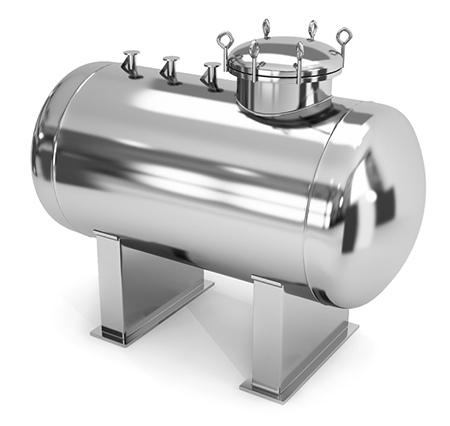
Regulatory adjustments and conformity demands often form the landscape of storage tank production, engaging manufacturers to stay alert and versatile. With boosting environmental problems and the push for sustainable methods, governing bodies are implementing stricter standards concerning emissions, products, and security criteria. The U.S. Environmental Security Company (EPA) and different state agencies are changing regulations that control the style and setup of storage containers, particularly those used for dangerous materials.
Manufacturers need to not just abide by existing regulations however also expect future changes, requiring recurring investment in r & d. This consists of taking on cutting-edge materials and modern technologies that improve container honesty and environmental management. Furthermore, conformity with policies such as the Spill Avoidance, Control, and Countermeasure (SPCC) guideline is imperative for manufacturers to avoid lawful liabilities and hefty penalties.
Furthermore, the integration of digital innovations facilitates compliance monitoring and reporting, allowing manufacturers to maintain transparency and efficiency. As policies remain to evolve, staying educated and positive is crucial for storage tank manufacturers to guarantee compliance, guard public health, and shield the environment, eventually forming an extra lasting sector.
Often Asked Questions

What Are one of the most Usual Materials Made Use Of in Storage Tank Manufacturing?
The most common materials utilized in storage tank manufacturing consist of carbon steel, stainless steel, and fiberglass. Each material provides distinctive advantages, such as longevity, rust resistance, and adaptability to numerous storage space demands and ecological conditions.
Just How Do Storage Space Storage Tanks Effect Local Ecosystems During Setup?
Storage container installment can interfere with local ecosystems by modifying land usage, influencing water drainage patterns, and possibly introducing toxins. Proper website evaluations and environmental management methods are necessary to minimize these effects and shield biodiversity.
What Is the Average Lifespan of a Modern Storage Tank?
The typical lifespan of a modern storage tank commonly ranges from 20 to three decades. Aspects such as material top quality, ecological conditions, and maintenance methods significantly influence durability and general efficiency throughout their functional lifespan.
How Do Manufacturers Guarantee High Quality Control in Production?
Manufacturers ensure top quality control with rigorous screening methods, adherence to market standards, and continual surveillance during manufacturing. Advanced modern technologies such as automation and real-time information analysis better improve consistency and integrity in storage tank production procedures.
What Are the Prices Associated With Maintaining Storage Tanks?
Keeping tank entails various costs, including regular evaluations, repair services, regulatory compliance, corrosion avoidance, and possible ecological remediation (Texas Oil & Gas Storage Tank Fabrication Authority). These costs can greatly influence important source general functional budgets and necessitate aggressive administration to guarantee lasting effectiveness and safety
As manufacturers progressively welcome automation technologies, the deployment of wise sensors is coming to be an essential facet of modern manufacturing processes in the storage tank industry. Manufacturers in the storage tank market are increasingly taking advantage of the power of AI-driven procedure optimization to improve operational performance and decision-making abilities. Progressively, the storage container production sector is embracing environmentally friendly materials as an essential aspect of sustainability techniques. In today's production landscape, improved safety and security methods have actually ended up being necessary for storage tank manufacturers. Regulatory adjustments and conformity needs often shape the landscape of storage space container production, compelling manufacturers to continue to be watchful and versatile.